
What Is a Wood Destroying Insect Report (WDIR)? What South Carolina Homebuyers Need to Know
Buying a home in South Carolina is exciting, until someone mentions a wood-destroying insect report, and you realize you have no idea what that means.
Key Takeaways:
- A WDIR (called a CL-100 in South Carolina) documents evidence of termites and other wood-destroying insects found during a visual property inspection.
- Most lenders require this report before approving a mortgage, and it's valid for only 30 days in South Carolina.
- The report covers only accessible areas; hidden damage behind walls or under floors won't appear, so a clear report isn't a guarantee.
You're not alone if this is your first time hearing the term. Most homebuyers encounter "WDIR" or "CL-100" for the first time during closing, often when their lender or real estate agent requests one with little explanation. The good news? Once you understand its purpose, the process is straightforward. This guide explains what the report covers, why it matters for your transaction, and how to use the findings to protect your investment.
What Does a Wood-Destroying Insect Report Include?
A Wood Destroying Insect Report (WDIR) is a formal document prepared by a licensed pest control professional that details findings from a visual inspection for termites and other wood-destroying insects. In South Carolina, this report is officially called the CL-100, or the Official South Carolina Wood Infestation Report. It's regulated by Clemson University's Department of Pesticide Regulation, which oversees all pest control operations in the state.
The report documents whether evidence of active or past infestations exists and notes any visible damage to wooden structures. According to the National Pest Management Association, the inspection covers "termites, carpenter ants, carpenter bees, and reinfesting wood boring beetles" (NPMA, "Forms Information"). The South Carolina CL-100 also includes wood decay fungi (commonly called rot) and moisture readings in the substructure, making it more comprehensive than some other states' forms.
Why Do Lenders Require Termite Inspections for Home Sales?
South Carolina sits in Termite Infestation Probability Zone #1 (Very Heavy), according to the U.S. Department of Housing and Urban Development's TIP Zone map. This puts our state alongside Georgia, Florida, Alabama, Mississippi, Louisiana, and eastern Texas as the highest-risk areas in the nation for termite damage.
Lenders require these inspections because termite damage can compromise a property's structural integrity, and by extension, the collateral backing your mortgage. The U.S. Environmental Protection Agency emphasizes the importance of professional inspections, noting that improperly handled termite issues "can cause contamination of the home and surrounding drinking water wells and will not protect against termites" (EPA, "Termites: How to Identify and Control Them").
In our experience, buyers who skip the inspection (when not required by their lender) often regret it later. We've seen homeowners discover extensive Formosan termite damage within months of purchase, damage that a pre-sale inspection would have revealed.
How the CL-100 Inspection Process Works
Understanding what inspectors look for helps you interpret your report accurately. The inspection is visual and focuses on accessible areas of the property.
1. Exterior Examination: The inspector begins outside your home, examining the foundation, siding, window and door frames, and wood structures such as decks, porches, and fences. They're looking for mud tubes (the tunnels subterranean termites build to travel between soil and wood), damaged wood, and conditions that attract pests—such as wood-to-soil contact or excessive moisture.
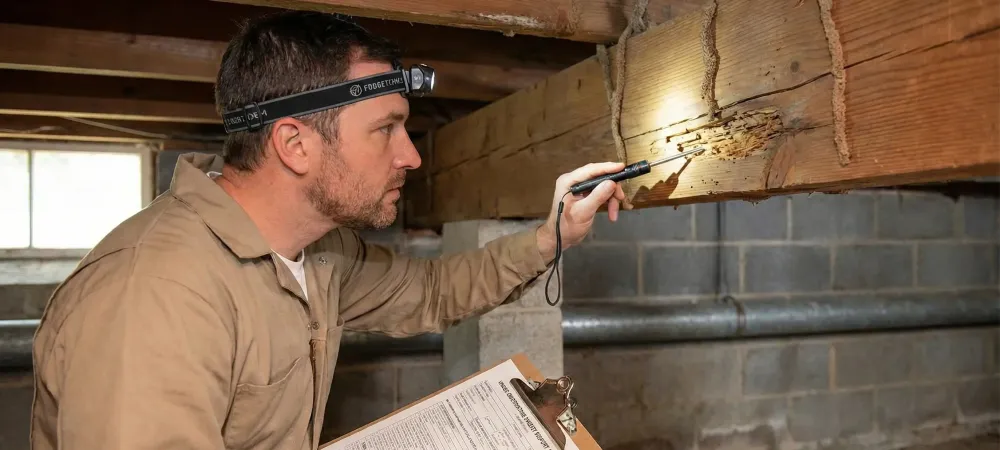
2. Interior Inspection: Inside, the inspector checks accessible areas, including basements, crawl spaces, attics, and garages. They examine wooden structural elements, such as floor joists, support beams, and window sills. The inspector probes wood with a screwdriver to detect hollow areas that indicate internal damage not visible on the surface.
3. Evidence Documentation: The inspector documents findings such as live insects, dead insects or insect parts, frass (termite droppings), shelter tubes, exit holes from wood-boring beetles, or staining patterns consistent with infestation. They also note any visible damage to wooden structures.
4. Report Preparation: Following the inspection, the pest control company prepares the official CL-100 form. The report states whether evidence of wood-destroying insects was found and describes the location and extent of any findings. In South Carolina, the CL-100 is valid for 30 days from the inspection date.
CL-100 vs. NPMA-33: Which Form Do You Need?
South Carolina uses its own state-mandated form, but depending on your loan type, you may need additional documentation.
CL-100 (South Carolina Form)
This is the standard form for most real estate transactions in South Carolina. It's approved by the South Carolina Pest Control Association and Clemson University's Department of Pesticide Regulation. The CL-100 covers termites, other wood-destroying insects, and wood decay fungi, and includes moisture content readings. Most conventional lenders accept this form.
NPMA-33 (National Form)
FHA and VA loans typically require the NPMA-33 form. This national form was developed by the National Pest Management Association and focuses specifically on wood-destroying insects (not fungi or rot). According to HUD, the NPMA-33 "must be used by wood destroying insect (WDI) inspectors to report the results of WDI inspections for any HUD/VA guaranteed property transactions" (HUD Archives).
Key Difference: The CL-100 is more comprehensive, covering wood-decay fungi as well as insect damage. The NPMA-33 focuses exclusively on insects. Your lender and real estate agent can confirm which form is required for your transaction. In many cases, the same inspection yields both forms if needed.
What a Wood Destroying Insect Report Does Not Cover
Understanding the limitations is just as important as knowing what the report includes:
- Inaccessible areas are excluded. The inspector cannot examine areas behind walls, under flooring, within insulation, or other concealed spaces. Damage may exist in these areas without appearing on the report.
- It's a snapshot in time. The report reflects conditions on the inspection date only. New infestations can develop afterward.
- It's not a warranty. A clear report does not guarantee the property will remain pest-free. Termites can infest a home within days of an inspection.
- Mold and mildew are not included. While moisture issues may be noted, comprehensive mold inspection requires a separate evaluation.
- It's not a structural damage assessment. While visible damage is documented, the report does not assess whether it compromises structural integrity. Significant findings may warrant a separate evaluation by a licensed contractor or structural engineer.
How to Prevent Wood-Destroying Insect Problems
Whether you're preparing to sell your home or protecting one you just purchased, these prevention strategies reduce your risk:
- Eliminate wood-to-soil contact. Building codes require at least six inches of clearance between soil and wood siding. Maintain this clearance around your entire foundation, including deck posts and porch supports.
- Control moisture around your foundation. Repair leaky faucets, ensure gutters direct water away from the house, and fix drainage issues that cause water to pool near the foundation.
- Store firewood properly. Keep firewood at least 20 feet from your home and elevated off the ground on a rack or concrete blocks.
- Remove dead trees and stumps. These serve as food sources that can attract termite colonies to your property.
- Ventilate crawl spaces. Proper airflow reduces moisture buildup that attracts wood-destroying insects. The CL-100 will flag moisture readings above 18-20%.
- Schedule annual inspections. Catching infestations early dramatically reduces treatment costs and structural damage. If you're concerned about termite risk, don't wait for a real estate transaction to get checked.
When to Call Professional Termite Inspectors
While routine wood-destroying insect inspections are essential for real estate transactions, certain situations warrant immediate professional evaluation:
- You notice swarming insects. Winged termites emerging inside your home, especially near windows or light sources during the spring months, indicate an established colony nearby. Formosan termites—which are particularly aggressive in coastal South Carolina—can cause severe damage faster than native species.
- You find mud tubes. Pencil-sized tubes running along your foundation, in crawl spaces, or on interior walls are clear evidence of subterranean termite activity.
- Wood sounds hollow when tapped. Termites consume wood from the inside out, leaving a thin outer shell that sounds hollow.
- You're buying or selling a home. Even if not required by your lender, a wood-destroying insect inspection protects both parties by documenting the property's condition.
- Your last inspection was more than a year ago. In South Carolina's high-pressure termite zone, annual inspections are considered best practice for ongoing protection.
Protect Your Investment with Professional Termite Protection
A wood-destroying insect report is more than a checkbox on your closing documents—it's a critical safeguard for what may be your largest investment. South Carolina's warm, humid climate makes our homes particularly vulnerable to termites and other wood-destroying pests. Understanding what the report covers, its limitations, and how to act on its findings puts you in control of protecting your property.
ProCore Pest Control provides comprehensive termite inspections and treatment throughout South Carolina. Our licensed inspectors prepare both CL-100 and NPMA-33 reports, ensuring you have the documentation required for your transaction. We also offer ongoing protection plans that include annual inspections and treatment warranties, using proven systems such as Sentricon and Termidor.
If you need a WDIR for an upcoming real estate transaction or want proactive protection for your home, contact us today for a free estimate. We serve homeowners across Greenville, Charleston, Columbia, Fort Mill, Rock Hill, and surrounding communities with same-day inspection availability.
Sources
- Clemson University. "Information for Homeowners." Department of Pesticide Regulation, clemson.edu/public/regulatory/pesticide-regulation/homeowners.html/.
- National Pest Management Association. "NPMA Forms Information." NPMA PestWorld, npmapestworld.org/your-team-tools/npma-forms-npma3399a99b/npma-forms-information/.
- U.S. Department of Housing and Urban Development. "HOC Reference Guide—Pest Control TIP Zones." HUD Archives, archives.hud.gov/offices/hsg/sfh/ref/sfh1-23a.cfm.
- U.S. Environmental Protection Agency. "Termites: How to Identify and Control Them." EPA.gov, epa.gov/safepestcontrol/termites-how-identify-and-control-them.