
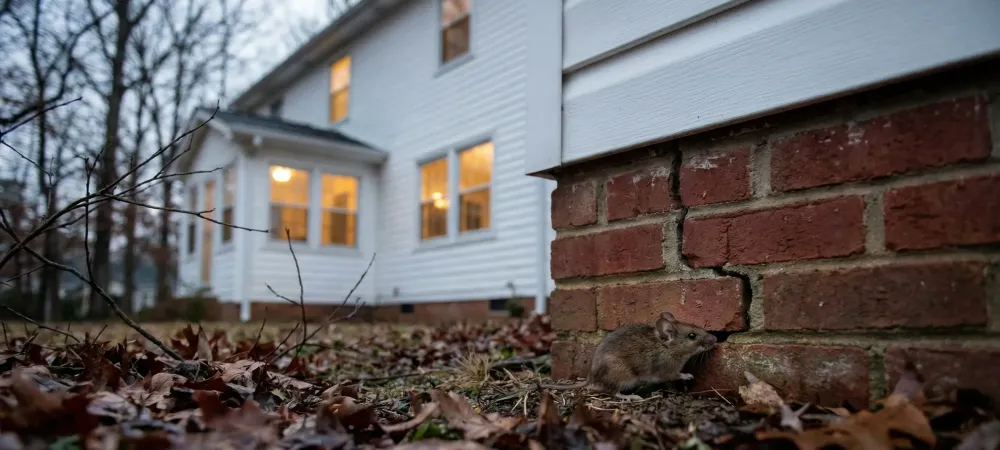
Why Mice and Rats Invade Homes in the Carolinas During Winter
That scratching in your attic at 2 a.m. isn't your imagination. As temperatures drop across North Carolina and South Carolina, mice and rats abandon their outdoor habitats and head straight for the warmest shelter available, your home. Understanding why this happens and how rodents get inside is the first step toward keeping them out for good.
Quick Answer: Why Do Rodents Come Inside in Winter?
Mice and rats enter homes during winter because dropping temperatures reduce outdoor food sources and expose them to cold they cannot survive. Your home provides consistent warmth, protection from predators, and easy access to food and water. Once inside, rodents breed year-round, meaning a single mouse in November can become a full infestation by spring.
What Drives Rodents Indoors When Temperatures Drop?
Rodents are warm-blooded mammals that cannot hibernate. When outdoor temperatures fall below 50°F, mice and rats instinctively seek shelter to regulate their body heat and find reliable food. The Carolinas may have milder winters than northern states, but temperatures still drop low enough, especially overnight, to trigger this survival behavior.
According to the Centers for Disease Control and Prevention, "Infestation of rodents in and around the home is the main reason disease spreads from rodents to people" (CDC, "Controlling Wild Rodent Infestations"). This makes prevention more than a comfort issue; it's a health concern. Mice and rats carry diseases, including hantavirus, salmonella, and leptospirosis, and they contaminate food and surfaces with urine and droppings as they move through your home.
The Environmental Protection Agency notes that homeowners should "remove food and water sources, and items that can provide them shelter" to discourage rodents from settling on their property (EPA, "Identify and Prevent Rodent Infestations"). The problem is that most homes unintentionally offer all three.
What Makes Your Home Attractive to Rodents?
Your house checks every box on a rodent's winter survival list. Warmth radiates from your foundation and walls. Kitchens and pantries provide food. Leaky pipes, pet bowls, and condensation offer water. Attics, wall voids, and cluttered storage areas make ideal nesting sites filled with insulation, cardboard, and fabric that they can shred for bedding.
Outdoor conditions push rodents toward these indoor resources. As temperatures drop, natural food sources like seeds, insects, and vegetation become scarce. Predators remain active. Rain and cold make outdoor burrows uncomfortable or dangerous. Your climate-controlled home solves every problem a rodent faces in winter.
How Mice and Rats Get Into Your Home
Rodents don't need much space to enter. The CDC warns that "mice can fit through a hole the width of a pencil (1/4 inch or 6 millimeters in diameter)" (CDC, "How to Seal Up to Prevent Rodents"). Rats require slightly larger openings, about half an inch, but can gnaw through wood, plastic, and even soft metals to widen gaps that are too small.
Finding and sealing these entry points is essential to keeping rodents out. A methodical inspection of your home's exterior and interior can reveal vulnerabilities you may not have noticed.
Step 1: Inspect Your Foundation
Walk the perimeter of your home and look closely at where the foundation meets the siding. Cracks, gaps around pipes, and spaces where utility lines enter are common entry points. Pay attention to areas where soil has settled away from the foundation, creating gaps rodents can exploit. Foundation vents and crawl space doors should close tightly with no visible daylight around the edges.
Step 2: Check Doors and Garage Seals
Exterior doors, especially garage doors, often have worn weatherstripping or damaged sweeps that leave gaps at the bottom. Mice can squeeze under a door with as little as a quarter-inch clearance. Side-entry garage doors and the seals where garage doors meet the ground are frequent problem areas in Carolina homes.
Step 3: Examine Utility Penetrations
Anywhere pipes, wires, or HVAC lines enter your home is a potential entry point. Look at exterior walls where plumbing enters bathrooms and kitchens, where electrical conduit passes through, and where your HVAC system connects. Gaps around these penetrations are often overlooked during construction or develop over time as materials settle and shrink.
Step 4: Inspect the Roofline and Attic
Roof rats, common in coastal areas of the Carolinas, are skilled climbers that enter through gaps along the roofline. Check where the roof meets the fascia, around gable vents, and at soffit intersections. Tree branches that touch or overhang the roof provide easy access routes. Inside the attic, look for daylight around vents, pipes, and where different building materials meet.
Step 5: Look for Signs of Active Entry
Rub marks (dark, greasy streaks from rodent fur), gnaw marks, and droppings near gaps indicate active entry points. Fresh droppings are dark and moist; older droppings are gray and crumbly. If you find these signs, you've located a route rodents are actively using.
Mice vs. Rats: Different Pests, Different Behaviors
Understanding which rodent you're dealing with helps determine where to focus prevention efforts. The three most common species in the Carolinas, house mice, Norway rats, and roof rats, behave differently and enter homes through different routes.
- House mice are small (2-4 inches, not including tail), curious, and adaptable. They explore new environments quickly and nest close to food sources, often inside wall voids, behind appliances, or in cluttered storage areas. Mice typically enter at ground level through small gaps and cracks.
- Norway rats are larger (7-9 inches, not including tail), more cautious, and prefer ground-level or below-ground entry. They often burrow near foundations, under sheds, and in crawl spaces. Norway rats are common throughout the Carolinas, especially in urban and suburban areas with older housing stock.
- Roof rats are slimmer than Norway rats and are excellent climbers. They prefer elevated nesting sites in attics, rafters, and trees. Roof rats are particularly common in coastal North Carolina and South Carolina, where mild winters and abundant vegetation support large populations. If you hear scratching overhead, roof rats are a likely culprit.
One important note: mice and rats rarely infest the same structure simultaneously. They are territorial, and rats will kill mice that encroach on their space. If you have one species, you likely don't have the other.
Why Winter Infestations Grow So Quickly
Rodents that enter your home in fall or early winter don't slow down once they're inside. Unlike their outdoor counterparts, indoor rodents continue breeding year-round because they have consistent warmth and food. A single female house mouse can produce up to eight litters per year, each containing four to sixteen pups. Those offspring reach reproductive maturity within weeks.
This means one pregnant mouse entering your home in November can lead to dozens of mice by February, all hidden inside walls, attics, and crawl spaces where you can't see them. By the time most homeowners notice droppings, sounds, or damage, the population is already established and growing.
Rats reproduce more slowly but still pose significant risks. A pair of Norway rats can produce up to 1,500 descendants in a single year under ideal conditions. The longer an infestation goes unaddressed, the more difficult and costly it becomes to eliminate.
How to Keep Rodents Out of Your Home This Winter
Effective rodent prevention combines exclusion (sealing entry points) with habitat modification (removing attractants). Taking these steps before cold weather arrives, or as soon as you suspect a problem, significantly reduces your risk of infestation.
- Seal gaps and cracks: Use steel wool combined with caulk for small openings. Steel wool alone can be pulled out; caulk alone can be gnawed through. Hardware cloth or metal flashing works for larger gaps. Focus on foundation-level entry points first, then work up to the roofline.
- Install door sweeps and weatherstripping: Replace worn seals on exterior doors, including garage doors. Ensure no gap larger than a quarter inch exists at the bottom of any door.
- Secure food storage: Store pantry items in glass or thick plastic containers with tight-fitting lids. Don't leave pet food out overnight. Keep garbage in sealed containers and remove it regularly.
- Eliminate water sources: Fix leaky pipes and faucets promptly. Don't leave standing water in sinks or pet bowls overnight. Address condensation issues in crawl spaces and basements.
- Reduce outdoor harborage: Move firewood piles at least 20 feet from your home (the CDC recommends 100 feet where possible). Trim vegetation away from the foundation. Remove leaf piles, debris, and clutter that provide shelter.
- Trim trees near the roofline: Cut back branches that touch or overhang your roof. This removes the "bridge" that roof rats use to access your attic.
- Address crawl spaces: Ensure crawl space vents have intact screens. Repair or replace damaged crawl space doors. Consider encapsulation for ongoing moisture and pest control.
When to Call a Professional for Rodent Control
DIY prevention works well before rodents establish themselves, but once an infestation takes hold, professional intervention is usually necessary. Store-bought traps and bait address individual rodents but don't solve the underlying problem: entry points remain open, attractants persist, and the population continues breeding.
Consider calling a professional if you notice any of the following:
- Droppings appearing repeatedly after cleaning
- Sounds in walls, ceilings, or attics, especially at night
- Gnaw marks on food packaging, wires, or wood
- A musty or ammonia-like odor in enclosed spaces
- Pets fixating on walls or specific areas of the home
- Visible rodents during daylight hours (indicates a large population)
Professional rodent control goes beyond trapping. It includes identifying and sealing entry points, removing nesting materials, sanitizing contaminated areas, and implementing monitoring to ensure the problem is fully resolved. For homes in Greenville, Charleston, Columbia, Charlotte, and surrounding areas, our residential pest control services offer comprehensive solutions that address current infestations and future prevention.
If you've already noticed signs of rodents in your home, acting quickly limits the damage and health risks a growing population can cause.
Protect Your Home Before Rodents Move In
Winter rodent invasions aren't random; they follow predictable patterns driven by temperature, food scarcity, and shelter availability. Understanding these patterns gives you the advantage. Inspect your home for entry points now, address attractants before cold weather peaks, and act quickly if you notice any signs of rodent activity.
For homeowners across North Carolina and South Carolina who want professional protection, ProCore Pest Control offers thorough inspections, exclusion work, and ongoing monitoring to keep rodents out for good. Request a free estimate or call today for same-day service.
Sources
- Centers for Disease Control and Prevention. "Controlling Wild Rodent Infestations." Healthy Pets, Healthy People, U.S. Department of Health and Human Services, 29 Sept. 2025, www.cdc.gov/healthy-pets/rodent-control/index.html.
- Centers for Disease Control and Prevention. "How to Seal Up to Prevent Rodents." Healthy Pets, Healthy People, U.S. Department of Health and Human Services, 18 Apr. 2024, www.cdc.gov/healthy-pets/rodent-control/seal-up.html.
- United States Environmental Protection Agency. "Identify and Prevent Rodent Infestations." Controlling Rodents and Regulating Rodenticides, 2 June 2025, www.epa.gov/rodenticides/identify-and-prevent-rodent-infestations.